


How do people – how do we – think? How should think?
When discussing “capabilities and skills” in an educational context (and what we should teach the next generation; and what children and young adults should learn in preparation for the real world, of work) – both “analysing” and “critical thinking” figure.

‘Frameworks’ is about Structured Thinking
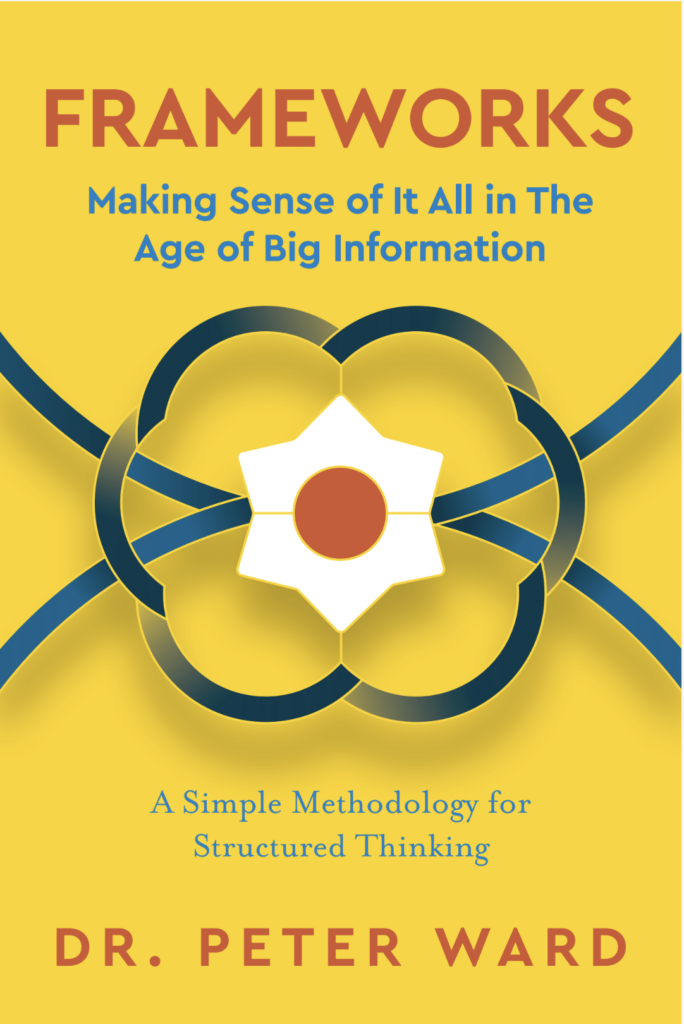
‘Frameworks’: Making Sense of It All in the Age of Big Information; A Simple Methodology for Structured Thinking. Dr Peter Ward, Published by Brandspire Digital Limited, January 2025 [Amazon Books https://www.amazon.co.uk/dp/B0DV49LZ75]
In his Book: The Organised Mind; Thinking Straight in the Age of Information Overload, Published by Penguin Random House Books, 2015, Daniel Levitin concluded that, “More so than at any time in history, it is crucial that each of us takes responsibility for verifyong the information we encounter, testing it an evaluating it. This sthe skill that we must teach the next generation of citizens of the world , the capability to think clearly, completely, critically, and creatively.
Reflecting on my past work on information modelling tools and applications in th 1990s, I began distilling out the ‘Frameworks’ methodology and the ‘Frameworks’ protype tool around 2011. Around the time that Jonathan Haidt describes his early concerns about smart phones, social media and their effects on children.
My take on Daniel Levitin’s highlighting what we should be teaching the next generation – the capability to think clearly, completely, critically, and creatively – is structured thinking. As I was formulating the ‘Frameworks’ Meta Model, and the construction and elaboration of “Thinking Models” (models of thinking and understanding) around the Core Spinal Model. Framed and Constrained. Why “Framed”? Why “Constrained”?
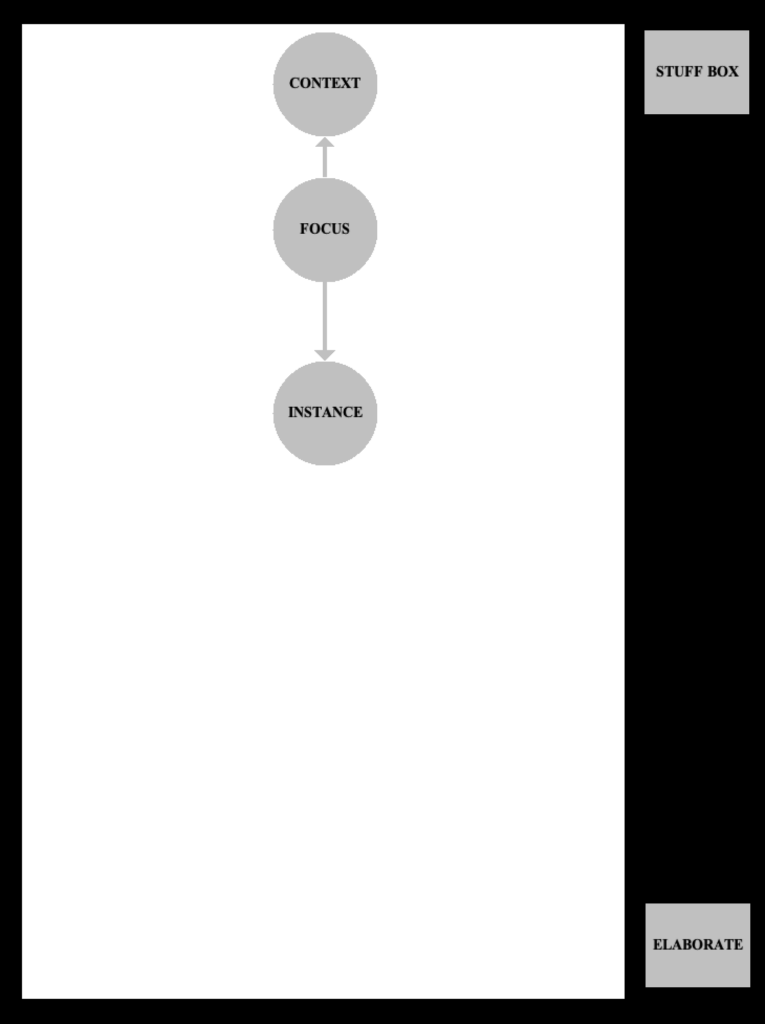
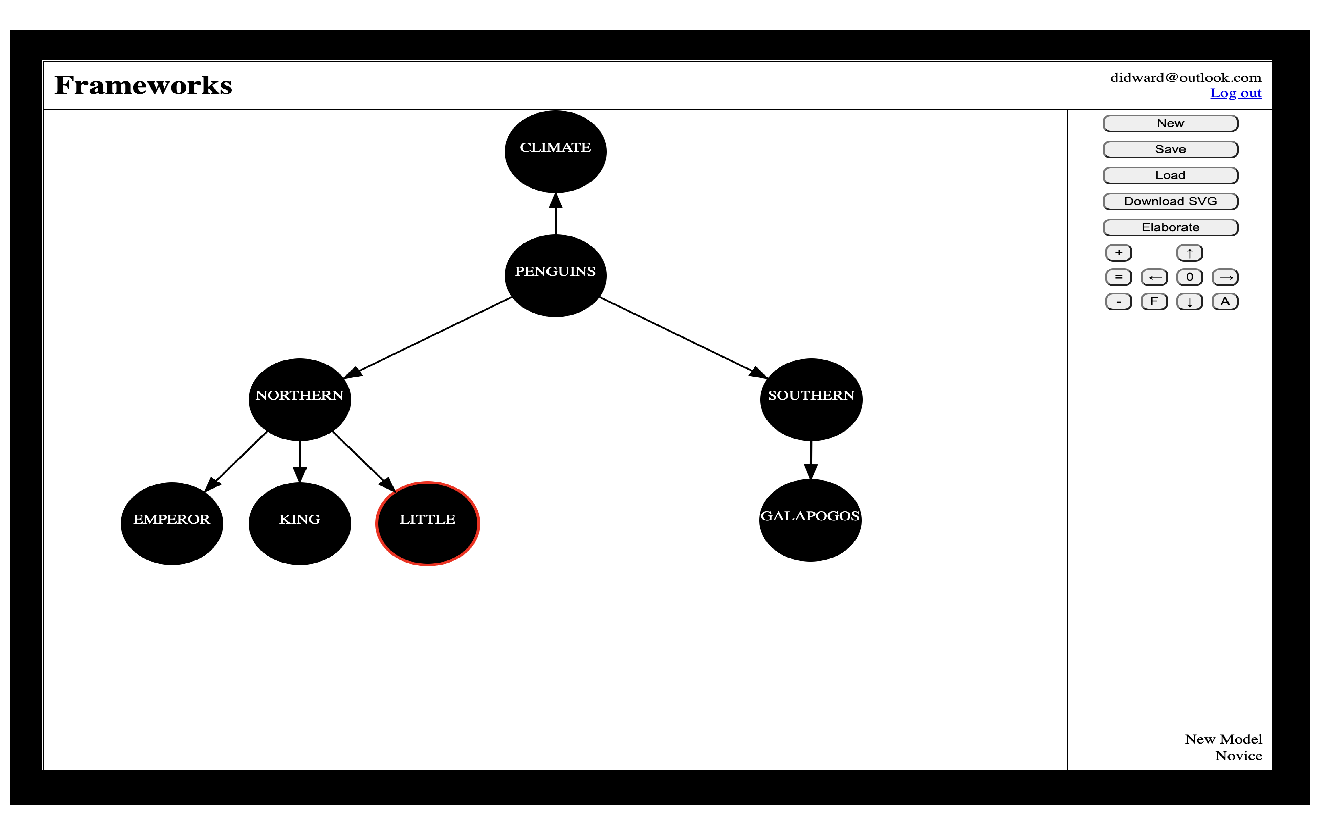
Independent and Structured Thinking?
Isnt that what we all do? Doesnt this come naturally to children? Why would an 8 year old or a 14 year old need to know about structured thinking and managing complexity?
The 21st century digital world into which the 8 and 14 year old will emerge – will be easier and easier to deal with as Big Tech enhances the “UX”, the User Experience? Simpler interfaces? Powerful algoritms for sure! Whats the need for structured thinking, for analysing, for idependent critiacl thinking? Where AI assistants will step in an do it all?
The ‘Frameworks’ thesis is that children* need to learn about complexity as soon as possble; to learn strategies and methods for reducing scale and complexity to manageable proportions.
* and “Ordinary People” including Parents and people at the Bustop and in the Bakers. Otherwise Professionals (tech savvy employing creative computing) and The Elite Tech-Savvy, providing the IT)
“Independent Thinking”?
‘Frameworks’ is about analyzing and visual thinking, and about representation, communication and sharing. About organising key information. About learning and remembering.
In the multidisciplinary context of cognitive development and cognition (how do we think, how do we learn, how do we remember how do we effectively communicate and how do we share key information)? In the context of information modelling, computer-based information modelling, informatics in the 21st century digital world, and visualisation as an effective way of structuring thinking and communication.
“Artificial Intelligence” and “Human Intelligence”
AI IN Education? Or, instead of Teachers and learning alot of stuff, where AI will do the trick?
AI AND Education! How will that work out? Side-by-side, a symbiosis?
The Sun Microsystems ‘SMILE’ Project, 1992
SMILE supporting multimedia interactive learning environments. Interactive Learning “CBL”, learning labs with a cluster of computers (a network?)? Facilitated by techicians?
Relieving teatchers? CBL/computers as apart of what?
Environments (teachers, tools, technicians; books and computers) as rich and enabling with an interaction between Teachers and Learners. Structured interactive learning. Browsing, focusing, selecting (hyper) linking with key stuff explanations, knowledge.
Bowsing visual, simple graphical interfaces to systems, to domains, to key stuff, to learning.
Essentially people-centred informatics.
Thanks to Neil Coe of Carta Design https://www.cartadesign.co.uk/